
The Disgrace of Gijon, 1982: how West Germany and Austria shut out Algeria
When Algeria stunned West Germany at the 1982 World Cup, their debut seemed destined for glory. Instead, they became victims of one of football's most notorious episodes: the Disgrace of Gijon.

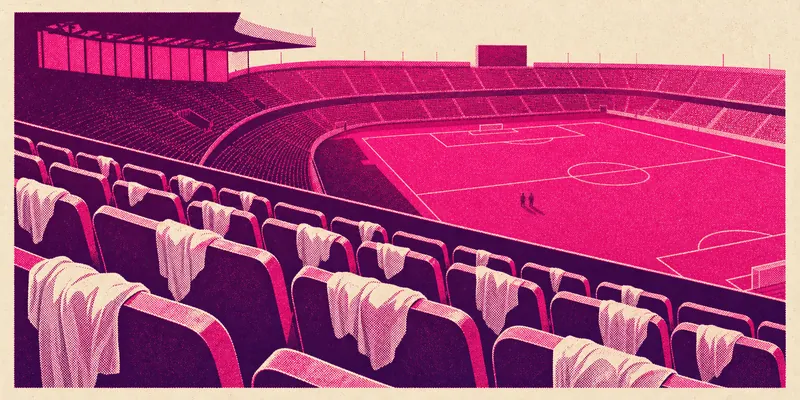
When Horst Hrubesch headed West Germany into an eleventh-minute lead against Austria, the crowd in Gijon’s Estadio El Molinón had no reason to suspect they were witnessing the beginning of the end. What followed those opening moments of the final Group 2 match at the 1982 World Cup was not a football contest but a cynical, seventy-nine-minute exercise in mutual preservation. It was a spectacle so devoid of sporting intent that it became immortalised by a single, damning name: the Disgrace of Gijon. The match ensured both European nations progressed, but at the expense of Algeria, the tournament newcomers whose vibrant football had been cruelly nullified by a result engineered off the pitch, not on it.
The Newcomers Who Stunned the Favourites in 1982
Algeria arrived at their first ever World Cup finals with little fanfare. The tournament’s expansion from sixteen to twenty-four teams had fuelled media disquiet, with many predicting a series of mis-matches between the established powers and the debutants. Placed in Group 2 alongside Austria, Chile, and the formidable West Germany - second favourites to lift the trophy behind Brazil - the North Africans were widely expected to be little more than bystanders. The seeded Germans were granted the privilege of playing all their group games at the same venue, Gijon’s Estadio El Molinón, while the other three nations shuttled between there and the Estadio Carlos Tartiere in Oviedo.
Any notion of an uneven contest was obliterated in their opening match. Facing the might of West Germany, Algeria produced one of the greatest shocks in the competition’s history. Goals from Rabah Madjer and Lakhdar Belloumi secured a sensational 2-1 victory, sending shockwaves through the tournament. In the group’s other opening fixture, Austria secured a narrow 1-0 win over Chile, leaving the group far more delicately poised than anyone had anticipated.
The second round of matches saw a return to the expected order. West Germany, stung by their initial defeat, responded emphatically. A hat-trick from their talismanic striker Karl-Heinz Rummenigge powered them to a comprehensive 4-1 victory against Chile. Meanwhile, Austria demonstrated their own strength by overpowering Algeria with a solid 2-0 win. With one game left to play, the group was wide open. West Germany, Austria, and Algeria could all still qualify for the next stage; equally, any of the three could be knocked out. Everything rested on the final day’s results.
A Three-Goal Lead and a Nervous Wait
Algeria played their final group match first, facing a Chilean side already eliminated after two defeats. The game took place in Oviedo, and for a while, it seemed Algeria were determined to leave nothing to chance. They tore into their opponents, stunning Chile by racing into a 3-0 lead with ten minutes of the first half still to play. A place in the second round looked all but certain. But a second-half fightback from the South Americans changed the complexion of the game and, ultimately, Algeria's destiny. Chile pulled two goals back, and while Algeria clung on to win 3-2, the reduced margin of victory left them vulnerable.
Their work was done. Now, they had to wait. The fate of the Desert Foxes depended entirely on the outcome of the final group game, scheduled for the following day in Gijon between West Germany and Austria. The mathematics were stark and unsettling. A victory for Austria, or a draw, would eliminate West Germany. A comprehensive German win by three or more goals would send Austria home. But one very specific result - a West German victory by one or two goals - would see both European neighbours progress at Algeria’s expense. The stage was set for what would become the Disgrace of Gijon.
The Disgrace of Gijon: A Non-Aggression Pact
There was, for a time, reason to hope for a genuine contest. The footballing rivalry between Germany and Austria was one of Europe’s oldest, dating back to 1908. More recently, at the 1978 World Cup in Argentina, a thrilling 3-2 victory for Austria in a match dubbed “The Miracle of Cordoba” had famously knocked the defending champions West Germany out of the tournament. The prospect of a repeat, of Austria going “hell for leather” to eliminate their rivals once more, was a tantalising one. It was not to be.
In Gijon, West Germany began with intent, throwing everybody forward from the kick-off. After eleven minutes, they got the goal they needed, Horst Hrubesch heading in at the near post to make it 1-0. And then, the game simply stopped. With the scoreline now perfect for both teams, the remaining seventy-nine minutes descended into a farce. The ball was passed lazily and aimlessly between defenders and back to the goalkeepers. Players from both sides showed no inclination to tackle, to press, or to score. It was a non-aggression pact played out in real time.
The reaction inside the Estadio El Molinón was one of fury. The Spanish crowd chanted “Fuera, fuera!” (“Out, out!”), disgusted by the cynical spectacle. Algerian supporters in the stands waved banknotes at the players, an unmistakable accusation of a fix. The contempt was not confined to the stadium. Television commentators around the world expressed their disbelief. Hugh Johns, covering the match for ITV in Britain, condemned the proceedings. Even the German television commentator delivered a damning indictment:
What’s happening here is disgraceful and has nothing to do with football. You can say what you want, but not every end justifies the means.
One German supporter in the crowd went as far as to burn his own country's flag in protest. The match, which came to be known as the Disgrace of Gijon, had transcended sport and become a global scandal.
"Shame On You!": West Germany, Austria and the Aftermath
If the on-pitch display was cynical, the post-match comments from the West German camp removed any doubt about their mentality. Coach Jupp Derwall was brutally blunt, telling reporters, “We wanted to progress, not play football.” Midfielder Lothar Matthäus offered a similarly pragmatic assessment: “We have gone through. That’s all that counts.” This “win at all costs” attitude provoked outrage. The German press was furious. Bild, the country’s biggest tabloid, ran a simple, damning headline: “Shame On You!” Willi Schulz, a respected former German international, used his newspaper column to label the players “gangsters.” In Algiers, the perceived injustice sparked loud and angry street protests.
FIFA was unmoved. The governing body announced that it could not annul the result or reschedule any remaining matches in the 1982 tournament. The 1-0 scoreline stood, and Algeria were out. However, the global condemnation forced a fundamental change to tournament rules. From the 1986 World Cup onwards, the final round of group stage matches would be played simultaneously, a lasting legacy born directly from the Gijon affair to minimise the risk of such collusion happening again.
The match was given several nicknames. In Germany, it was the Schande von Gijon (“Shame of Gijon”) or, more sarcastically, the Nichtangriffspakt von Gijon (“Non-aggression pact of Gijon”). A Spanish newspaper, hinting at a far darker chapter of history, dubbed it El Anschluss, a loaded reference to the 1938 unification of Germany and Austria under Hitler. While such a comparison was reprehensible, it underscored the depth of anger felt towards the two teams.
A Fault Line in German Football
The damage to West Germany’s reputation was compounded later in the tournament. In their semi-final against France, goalkeeper Harald Schumacher committed one of the most infamous fouls in World Cup history, brutally colliding with Patrick Battiston, leaving the French player unconscious and with broken teeth. Schumacher’s subsequent lack of remorse - when told Battiston had lost two teeth, he remarked, “Tell him I’ll pay for the crowns” - cemented the image of this German team as ruthless and deeply unsporting. There was, as he put it, no compassion amongst professionals.
The events of 1982, from the Disgrace of Gijon to Schumacher’s foul, inadvertently exposed a fault line within German football. The country’s football culture had been founded on amateur principles, fostering a distrust of the professionalised, win-at-all-costs mentality embodied by the 1982 squad. The team’s behaviour turned off many young German supporters, creating an ambivalence towards the national side that would linger for years.
It has never been suggested that a formal pre-match agreement was made or that money changed hands between the West German and Austrian teams. The most likely explanation is that it was an unspoken arrangement, a mutual understanding that developed on the pitch once the 1-0 scoreline was achieved. Both teams realised they risked their own elimination if they continued to play at full pelt and, guided by cynical pragmatism, chose not to take that chance.
The Long Wait for Revenge
None of this analysis offered any comfort to Algeria. They had been robbed of a place in the second round of their debut tournament not by a failure of skill or spirit, but by a stitch-up. They qualified again for the finals in 1986, but the magic of their Spanish adventure was gone. A 1-1 draw with Northern Ireland was followed by a spirited 1-0 defeat to Brazil and a final 3-0 loss to Spain, which saw them finish bottom of their group.
The sense of injustice from 1982 never faded. For Algerian supporters, the memory of that day in Gijon became a core part of their World Cup story. When they finally returned to the finals decades later, the prospect of a knockout match against Germany carried a particular weight. Revenge, for the Disgrace of Gijon, was not a dish that had been forgotten - it had merely been delayed.
Questions and answers
What was the Disgrace of Gijon?
The Disgrace of Gijon was the name given to a 1982 World Cup match between West Germany and Austria. After West Germany scored an early goal, both teams effectively stopped playing to ensure a 1-0 result that would see them both qualify for the next round at the expense of Algeria.
What was the score in the Disgrace of Gijon match and who scored?
The final score was West Germany 1-0 Austria. The only goal was scored by West German striker Horst Hrubesch in the eleventh minute of the match.
Why was Algeria eliminated from the 1982 World Cup?
Algeria were eliminated on goal difference. After beating Chile 3-2, they were level on points with West Germany and Austria. The 1-0 German win was the only result in the final game that allowed both European teams to finish ahead of Algeria and progress.
How did FIFA change the rules after the Disgrace of Gijon?
Following the global outrage, FIFA mandated that from the 1986 World Cup onwards, the final round of group stage matches must be played simultaneously. This rule was introduced to minimise the risk of teams colluding based on the result of an earlier game.
How did fans and the media react to the match?
The reaction was furious. The crowd in Gijón chanted for the players to be sent off, Algerian fans waved banknotes, and one German fan burned his flag. Commentators condemned the spectacle, and the German newspaper Bild ran the headline "Shame On You!"